Publishing your book can feel like reaching the finish line. Yet when a reader finds that book on Amazon, another important journey begins.
They may like the cover. They may read the description. Then curiosity kicks in: Who wrote this? What else have they published? Is there another book worth reading?
Your Amazon Author Central profile helps answer those questions.
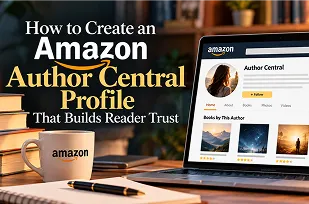
Instead of leaving readers to search for you across Amazon, an Author Page gives your books and author information a clearer home. Amazon says Author Central lets authors add books, manage biographies, review customer feedback, view sales-related information, and see how many readers follow them.
More importantly, a thoughtful profile helps you look like an author with a body of work rather than someone with a single product listing.
Your Amazon Author Page Is Part of the Reading Experience
Think about what happens after someone finishes a book they enjoyed.
Often, they want more.
They may tap the author’s name, look for another title, or simply try to learn a little about the person behind the story. A complete Amazon author page makes that next step easier because your books, biography, and profile information can appear together.
Amazon specifically encourages authors to keep their biography and profile photo current because readers may visit the Author Page while deciding what to buy.
That makes your profile more than an administrative task.
It becomes part of your reader experience.
Your book introduces your writing. Your Author Page introduces the person and larger body of work behind it.
Start by Claiming Your Author Central Profile
You cannot improve a page you have not claimed, so begin with the basic setup.
If you publish through Kindle Direct Publishing, Amazon currently directs authors to the Marketing section in KDP. From there, choose Author Central and select the marketplace where you want to create or manage your page.
You can then sign in using your KDP account details and search for one of your books by title, ISBN, ASIN, or author name. Once you find the correct title, you can claim it as yours.
You can also visit the official Amazon Author Central portal directly.
Take your time during this step. Authors with similar names exist, and older editions can sometimes appear alongside newer ones. Make sure you claim the correct book and author identity.
Bring Every Eligible Book Under One Roof
Once your profile exists, check your book list carefully.
Do not assume every title has connected itself correctly.
Amazon lets you search for additional books through the Books section using the title, ISBN, ASIN, or author name. You can then add the correct edition to your account.
This matters especially if you have:
- written several books over time,
- published under more than one format,
- worked with different publishers,
- released revised editions, or
- started using a pen name.
A reader who enjoys one book should not need detective skills to discover the next one.
So view your page from their perspective. Are your relevant books visible? Do the titles belong to you? Is anything important missing?
That small audit can make your author presence feel much more connected.
Write an Amazon Author Bio for Readers, Not a Résumé
The biography often causes authors more trouble than the technical setup.
Some write almost nothing. Others list every achievement they have collected since school.
Neither approach helps much.
Your Amazon author bio should tell readers enough to understand who you are, what you write, and what connects you to your subject or genre.
For example, a children’s author might mention a love of imaginative storytelling and the themes explored across their books. A historian might briefly explain their research background. A memoir writer may share the life experience that shaped their work.
However, keep the focus relevant.
You do not need your complete employment history. You also do not need dramatic claims such as “world-changing writer” or “the next great voice in fiction.”
Specific details usually feel more human.
Amazon also allows authors to add biographies in different languages, which can be useful when your books reach readers in more than one market.
A Quick Reader Check
Before publishing your bio, read it once and ask:
If you discovered this author today, would the bio make you curious about their books?
If not, remove the filler and give readers something real to connect with.
Choose a Photo That Matches the Author You Want Readers to Remember
Your author image does not need to look like a fashion campaign.
It does need to look intentional.
Use a recent, clear image where readers can recognize you easily. Good lighting, a simple background, and a natural expression usually work better than an overly edited photograph.
Most importantly, stay consistent.
If possible, use the same or a closely related author photo across your website, media kit, social profiles, event pages, and Amazon presence. Recognition builds gradually. Consistent imagery helps readers connect those separate encounters with the same author.
Amazon’s own publishing guidance recommends completing your author profile with a profile picture, biography, and accurate book listings.
Give Readers a Reason to Follow You
Amazon Author Pages can include a Follow option.
That feature matters because readers who enjoy your work can choose to keep up with your author activity. Amazon states that eligible followers may receive notifications about new releases or books available for preorder, depending on factors such as their marketing-email settings and whether they have already ordered the title.
So avoid thinking of followers as a guaranteed mailing list.
Instead, see the Follow button as another connection point.
A simple reminder on your website or at the end of a newsletter can encourage existing readers to follow your Amazon profile.
The key word is existing. You are helping interested readers stay connected, not pressuring strangers into another subscription.
Keep Your Profile Alive After Setup Day
One of the easiest mistakes is creating an Author Central account and never looking at it again.
Your writing career changes. Your profile should change with it.
Review the page whenever you release a new book, change your author branding, update your biography, use a new professional photo, or notice that a title is missing.
You can also use Author Central to monitor customer reviews and Amazon Best Sellers Rank. Certain features vary by market; for example, Amazon currently lists editorial reviews and BookScan information as U.S.-specific Author Central features.
A quarterly profile check is usually enough for most authors unless you publish frequently.
If managing your author platform feels disconnected from the rest of your publishing process, Next Chapter Publishings can also be considered when you are organizing broader professional publishing support. Explore the site’s publishing services for the areas that fit your project.
Your Author Profile Should Support Your Wider Online Presence
Amazon Author Central should not replace your website, newsletter, or broader author brand.
It should work alongside them.
Your website gives you greater control over long-form information, updates, reader resources, and direct audience relationships. Meanwhile, Amazon meets readers where many of them are already browsing for books.
The best approach connects those experiences.
Keep your author name, headshot, genre positioning, and general messaging consistent. When someone moves from your website to Amazon, they should immediately know they have reached the right author.
That consistency also follows a broader principle encouraged by Google: create useful, trustworthy, people-first content that clearly shows who created it and provides readers with meaningful information.
Final Thoughts
Your Amazon Author Central profile does not need clever tricks.
It needs clarity.
Claim the correct books. Use an approachable photo. Write a bio that sounds like a person rather than a corporate statement. Keep your titles together. Check the page occasionally. Then give interested readers an easy way to follow your work.
Readers already have thousands of books competing for their attention. You cannot control every reason they choose one author over another.
However, you can remove unnecessary uncertainty.
When someone becomes curious about you after discovering your book, give that curiosity somewhere useful to go.
A complete Amazon Author Central profile does exactly that.