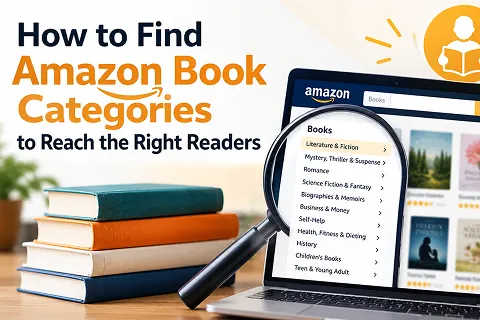
How to Find Amazon Book Categories to Reach the Right Readers
Table of Contents Imagine your book sitting on a shelf where no one looks. The cover looks great. The story is strong. You spent months
Your book is now live on Amazon. The cover looks good. The story is powerful. Everything is prepared for the readers.
Yet days pass, and sales stay slow.
You share the link with friends. You post online. A few people show interest, but nothing much changes. Sound familiar?
Many authors face this exact problem. They spend months writing, then give little thought to selling. But book marketing needs more than a few social posts. You need to know what draws readers, what earns their trust, and what makes them buy.
So where should you begin? Below is a practical guide to book marketing for authors who want better reach and more sales.
One big mistake is trying to reach every reader. After all, not everyone enjoys the same books. A fan of crime thriller may skip a poetry collection. A reader seeking business advice may skip historical fiction.
So focus on readers who already buy books like yours. Look at popular titles in your category and read their reviews. Notice what readers love, dislike, or wish the author had added.
Then ask where those readers spend time online. Fantasy fans, for example, join genre groups and follow reviewers. Business readers often prefer podcasts and newsletters. Once you know your crowd, planning gets easier.
Take a look at practical tips to help authors reach the right readers through focused marketing efforts.
Imagine someone browsing an online bookstore. They see dozens of titles, and yours sits among them. What makes that reader stop? A good story alone may not be enough.
Many authors describe what happens in their books. Readers also care how a book will make them feel. A romance may promise an emotional ride. A mystery may offer suspense and sharp turns. So show readers why your book is worth opening.
Your cover, title, and description work as a team. The cover should fit your genre and look clear at a small size. The description should spark interest without giving too much away. In a thriller, for example, name the main danger. Then let readers guess what comes next.
Authors often spend hours on social media. Yet social platforms are only one piece of the picture. Readers also search stores, trust reviews, and ask friends. So a good plan uses several paths.
Many readers start on Amazon or other retailers, so your listing matters. Use an accurate description, the right categories, and relevant search terms. Amazon KDP’s book promotion resources can help you go further.
A tip from a fan of your genre can open doors. Find reviewers who cover similar books. Then send a short, personal note with your genre, main appeal, and review copy options.
Podcasts reach people who love hearing from authors. Offer a good talk, not a sales pitch. Then point listeners to your book page. An email list helps too, since it reaches readers without social feeds. Start with a simple sign-up form and a reason to join.
Attention alone does not pay for book sales. Readers need a clear path from first look to purchase. Think of it in three stages.
First, demonstrate your book to others who may want to read it. Use short guest articles, interviews, or paid advertising.
Next, enlighten the buyers. Post an excerpt, reader comments, or a short interview. Don’t hurry people up to the cashier. For some, it takes a little more time first.
Finally, direct interested readers to a clear sales page. Make sure the buying link works and the purchase button is easy to find.
You do not need thousands of dollars to start. Some useful tasks cost little beyond your time. Paid ads can help too, when you use them with care.
Begin with tasks you can handle yourself. Contact book bloggers, join reader talks, or share a free sample.
Ads can bring new readers, but they cannot fix a weak cover or an unclear description. So prepare your book page first. Then start with a small test budget, track costs and sales, and stop any ad that performs poorly.
A post may earn hundreds of likes without one purchase. A small email campaign, meanwhile, may bring fewer people but more buyers. So look past likes. Watch store visits, purchases, and email sign-ups instead.
Nobody wants to see “Buy my book” every day. Fortunately, authors have better ways to promote their books.
Readers enjoy learning how stories begin. Share a research detail or what inspired a character.
Demonstrate early ideas for cover, writing notes, or workspace. These details add authenticity to your writing journey.
Positive reviews help other readers decide. Use real feedback, and ask permission before you quote it.
Many authors place too much pressure on release day. But one day rarely tells the whole story. Treat publication as one part of a longer campaign.
Start sharing once your book details are set. Reveal the artwork or share your writing journey. Contact reviewers early and have your emails pre-planned.
Choose one action you want your readers to take, such as visiting your sales page. Then let your posts and emails back it up.
Do not stop when release week ends. Review what drew the most interest. Then use those findings to plan your next push.
Selling one book is a good start. But a lasting career needs more than one launch. Your author brand helps readers remember you. It covers your genre, writing voice, and visual style.
So keep your name and message steady across sites. Make your other titles easy to find.
Even a good campaign can lose steam when small problems go unchecked. Here are a few to avoid:
Marketing gets hard when you also juggle writing and publishing. You may have ideas but lack time to act. Or your ads may bring clicks without enough sales.
Sometimes, professional assistance can help. Book marketing services include a marketing plan, researching your audience, and managing the campaign. However, choose services that match your requirements. Discover what is included in each pack and how it is monitored by the book marketing team.
Next Chapter Publishings helps authors explore practical ways to build visibility and reach interested readers.
Your book needs more than occasional promotion. Build a clear marketing approach that connects your story with interested readers.
Writing a book takes commitment. Helping readers discover it takes a plan.
Book marketing starts with knowing your audience, designing your book for marketing, and choosing the right distribution channels. You don’t have to follow every trend. Focus on what gets you closer to interested readers.
Next Chapter Publishings can help you look at next steps toward better visibility and a more targeted marketing campaign.
Yes! With a clear strategy, you can reach the audience that appreciates your type of genre.
Select your readers and budget. Test a few methods and compare results. Next Chapter Publishings can help you explore suitable options.
It can improve planning. Still, no agency can promise a fixed result.
Next Chapter Publishings supports authors who want a more organized marketing approach.
Turn your finished manuscript into a professionally published book with expert support.
Recent Post
Table of Contents Imagine your book sitting on a shelf where no one looks. The cover looks great. The story is strong. You spent months
Table of Contents Publishing your book can feel like reaching the finish line. Yet when a reader finds that book on Amazon, another important journey
Table of Contents The right illustration style for a children’s book can lift your story off the page. The wrong one can quietly pull it