From “What If?” to Written: How to Become a Children’s Book Author
Table of Contents Here is the short answer. How to become a children’s book author comes down to six steps: pick your reader, find one
Think of a pyramid. At the very top sits one small block: the answer. Below it, wider layers hold the reasons, the skills, and the habits. Last, the base holds the daily routines that keep everything standing. So, this guide starts with the answer. Then, it works downward, one layer at a time.
Along the way, you will follow Maya. She is a made-up character who stands in for many new editors. Her story is a composite, not a real case. Still, her steps are real ones you can copy.
So, how to become a book editor? In short, pick one editing service, practice it daily, prove it with samples, and offer it to people who need it. That is the capstone. Still, every word in that sentence hides some work.
First, “pick” means you choose a lane. Next, “practice” means you edit real pages and collect honest feedback. Then, “prove” means you build a small portfolio. Last, “offer” means you reach out to authors, presses, or editorial teams.
Does the path need a degree? Not always. In fact, many editors arrive from teaching, journalism, marketing, or customer service. Also, others hold English degrees. Still, they all share one trait. They can show clients clear proof of skill.
Does it take long? Often, yes. But, you can start this week. Even so, no one can promise paid work by a fixed date. Instead, aim for steady growth in skill. As a result, chances tend to follow.
Now meet Maya. She taught high school English for six years. One evening, a friend asked her to read a self-published novel. Maya loved the task. Yet, she had no idea what came next. So, she built a plan. You will watch it unfold below.
Many new editors stall before they start. Often, a myth is to blame. So, let’s clear five of them away.
Myth one: “I must catch each single error.” In fact, no editor does. Even the best miss a few. Instead, good editors use a clear process. As a result, they catch most problems and flag the rest.
Myth two: “Editing means fixing grammar.” But grammar is only one side. Editors also guard clarity, flow, and voice. Plus, a book can be correct and still be dull.
Myth three: “I need a big name on my resume.” Not so. Clients want proof. For instance, a tidy sample with notes can win more trust than a long list of titles.
Myth four: “Authors hate editors.” Rarely. Most authors want help. Still, they fear harsh words. So, a kind tone is a real skill, not a bonus.
Myth five: “I have to know everything first.” Of course, that is impossible. Instead, learn the basics. Then, look up the rest as you go. After all, professionals check their style guides daily.
At first, Maya thought “editor” meant “person who fixes commas.” Soon, she learned the truth. In reality, the word covers four distinct jobs. Each one needs its own mindset.
Developmental editing asks, “Does the story work?” Say, a mystery may solve its biggest puzzle too early. Then, the rest of the book sags. A developmental editor spots this and suggests a new order. Besides plot, this editor studies pacing, structure, and argument.
Line editing asks, “Does every page read well?” Here, the editor trims clutter and smooths rhythm. Also, the author’s voice must stay alive. After all, a short sentence can build tension. Plus, a quirky phrase can reveal a character.
Copyediting asks, “Is it accurate and consistent?” For instance, a detective’s partner may be Daniel in chapter two and David in chapter nine. A copyeditor catches that slip. Next, the editor records the right name in a style sheet. Plus, this person fixes grammar, spelling, and punctuation.
Proofreading asks, “Is it ready to print?” It happens after layout. So, the proofreader hunts for leftover errors, such as a wrong font or a missing full stop. But, this stage is not for rewriting. Big changes at this point can disrupt production.
Maya made a simple chart. First, she listed what she enjoyed. Next, she matched each item to a service.
Most beginners start with copyediting or proofreading. The reason is simple. These services have clearer standards. As a result, you can measure your progress. Later, you can add more services. Yet, start with one.
Next, Maya asked an honest question. What do clients and employers actually look for? In other words, which book editor qualifications open doors?
First, the short answer. A degree helps in some jobs, but it is not the only route. For one, some publishers prefer English, journalism, or communications degrees. Also, a nonfiction editor may need subject knowledge. A history background helps with history books. Plus, a science background helps with educational texts.
Still, freelance clients think differently. Mostly, they want to know one thing. Can you improve my manuscript? So, samples, references, and smooth communication often weigh more than a diploma.
Strong book editor qualifications usually blend these seven skills:
Of course, no single skill can replace the others. Instead, they operate as a team. Perfect grammar is worth little, for example, when you have destroyed an author’s confidence. Also, a warm tone counts for nothing if you miss errors.
Here, the pyramid narrows to its most useful lesson. Good editing is not about changing more. Instead, it is about changing the right things.
At first, Maya filled pages with red marks. Then, a mentor looked at her sample and smiled. “Half of these changes are your taste,” she said. “Not the author’s mistakes.” That comment stung. But, it changed all that needed changing.
So, Maya created a rule. She asked three questions before making every change;
If the answer to all three was no, she left the text alone. As a result, her edits became lighter and smarter.
Consider this line: Didn’t want nothing to do with that place. A grammar tool may flag the double negative. Yet the line could be a character’s natural speech. So, changing it may flatten the voice. Before touching any odd phrase, ask why the writer chose it.
Sometimes, you cannot tell whether something is a mistake. In that case, ask. Say, a character leaves home in the morning. Then, the next chapter shows the same person arriving home at midnight. The timeline may be fine. Even so, the jump may confuse readers. A short question protects the author’s intent and saves you from a wrong guess.
Now we reach the part many readers search for. Wondering how to become a book editor with no experience? Begin by creating your own experience. In fact, you don’t need a contract to practice. You only need pages you have permission to edit.
Maya gave herself thirty days. Moreover, she used only her own writing and free practice texts. Here are her five drills.
First, she picked one page. Next, she read it once without touching anything. Then, she noted where she slowed down. After that, she turned on Track Changes and fixed only what passed the Three-Question Test. Last, she wrote a short reason beside each change.
Next, she wrote a scene with four characters. Then, she planted mistakes on purpose. For one, she changed a character’s age halfway through. Also, she spelled one town two ways. Afterward, she hunted for her own traps. Last, she logged each find in a simple style sheet.
Also, she wrote a passage that repeated itself. Then, she tightened it without changing the meaning. After that, she compared both versions. Did the new one read better? If a sentence already worked, she put it back. In this way, she learned restraint.
Next she imagined a story with contradictory facts. One chapter said a family moved in June. Another said September. So, she wrote a gentle note: Could you confirm when the family moved? Chapter three suggests a different month. This works far better than scribbling “wrong date.”
Last, she walked away from every exercise. Then, she returned the next day with fresh eyes. She looked for errors she had added. Also, she reread her comments. Were they kind? Were they clear? This habit protects you later, when real clients depend on you.
After thirty days, Maya had speed, confidence, and a written record of her thinking. Plus, she had the raw material for a portfolio. So, how to become a book editor with no experience really means this: practice on purpose, and save the proof.
Self-study gives you a start. Yet, training shows your blind spots. A good course adds structure, standards, and feedback.
First, read the syllabus. Does it teach proofreading? Or does it focus on developmental work? Perhaps it covers academic editing instead of trade books. So, choose the course that fits your goal, not the one with the flashiest title.
Videos explain ideas. Feedback, however, shows whether you can use them. For instance, an instructor may point out edits you didn’t need. Or, they may reveal errors you missed. So, compare courses by their practice work and review.
Next, look at editing associations. Many share training and testing tools. For instance, Editors Canada lists programs on its professional development page. Still, entry rules and costs differ. So, check current details before you enroll.
Reading is training too. But, read with a pencil in hand. First, pick a published book in your genre. Next, study how the author opens a chapter. Then, notice where the pace speeds up. Also, mark sentences that feel smooth. Ask why they work. Say, was it the rhythm? Or was it the plain, strong verb? Over time, your ear grows sharper. As a result, you will spot weak spots faster in other people’s drafts.
Also, pick one style guide. It settles questions about capitals, numbers, and punctuation. For one, many American book editors use The Chicago Manual of Style. Also, some publishers keep house rules of their own. Still, you don’t need to memorize a guide. Instead, learn how to find answers fast.
Next, Maya built her portfolio. First, she made a rule. Quality beats quantity. In fact, three clear samples beat twenty messy ones.
Sample one shows accuracy. She chose a passage with grammar and consistency problems. Then, she showed her corrections. After that, she listed the main issues she fixed.
Sample two shows judgment. Next, she picked a passage needing clearer words. She offered a revised version and kept the author’s meaning. Then, she explained why the new version read better.
Sample three shows communication. Last, she wrote a few sample queries. They covered unclear facts and shaky timelines. As a result, clients could see how she speaks to authors.
Besides samples, she added a short introduction. For example: I copyedit mystery novels for independent authors. That line is clearer than “I edit everything.” Also, she listed her training honestly.
Two rules guided her. First, never post private manuscript text without permission. Second, label practice samples as practice. Plus, never invent praise from clients. In the end, trust begins long before the first paid job.
Explore how expert editing improves clarity, strengthens storytelling, and brings out the best in an author’s original voice.
Soon, an author wrote to Maya. They had finished a 35,000-word memoir. Yet, they didn’t know which service they needed. Here, her judgment mattered most.
First, she asked questions. Was the draft complete? Had the author revised it? Did they care about structure or grammar? Who would read the book?
Next, she requested a sample of a few pages. Then, she judged the state of the writing. Did it match her skills? If not, she would say so. After all, an honest referral beats a bad fit.
After that, she defined the service. The author asked for proofreading. Still, the text needed copyediting first. So, Maya explained the difference in plain words. Moreover, she never promised that one pass would fix it all.
Then, she wrote a short agreement. It did not need to be complicated. Instead, it covered these points:
Also, she avoided promising perfection. After all, no process removes every error. Instead, she described her quality checks.
Sooner or later, an author will reject a change. But that is not a failure. Editing is a team sport. So, stay calm and curious.
First, sort the change into one of two bins. Some changes fix clear errors. Others are matters of taste. For instance, a wrong name needs fixing. A different word choice, however, may just be your preference. In that case, let it go.
Next, keep your comments specific. Avoid saying a passage is “bad.” Instead, say what you see. For instance: This passage repeats the point from the last scene. Then, offer one option.
Last, remember who owns the book. The author makes the last call. Still, flag any factual, legal, or serious consistency issue clearly. After that, record the decision in your style sheet. As a result, you won’t have the same talk twice.
By now, you may wonder what the work feels like. So, here is one ordinary day.
At 8:30, Maya opens her inbox. First, she answers two author emails. Next, she checks her schedule. She has a 50-page copyedit due Friday today.
At 9:00, she starts the first pass. Also, her style sheet sits open beside the manuscript. Each time she meets a new name, she adds it. Plus, she logs every spelling choice. As a result, the book stays consistent from page to page.
By 11:00, she hits a snag. A scene says it is raining. Yet, two passages later, the sky is clear. So, she writes a query instead of a fix. Should the rain stop here? I couldn’t tell if the change was intended.
After lunch, she reads her morning work again. Surprisingly, she finds two edits she no longer likes. So, she undoes them. In other words, she follows her own Three-Question Test: when in doubt, leave it out.
At 4:00, she sends a short update to the author. Then, she logs her hours. Last, she closes her laptop. In short, the job mixes focus, care, and calm talk with real people.
Pricing worried Maya most. Still, a simple process helped. First, she reviewed the manuscript. Then, she estimated the time and skill it needed. Last, she chose a pricing method.
Per-word rates suit projects of known length. So, quotes become easy. Still, two manuscripts of equal length can need very different effort.
Hourly rates suit projects with unclear workloads. But clients like estimates. So, time yourself during practice. Then, use those numbers when you quote.
Project fees give clients one clear price. Even so, define the length and the editing pass. Also, say whether follow-up work is included.
Remember that your rate must cover more than editing. Plus, you will answer emails, build style sheets, and handle admin. So, count all of it.
For market context, the Editorial Freelancers Association shares survey-based rates on its rate chart. Yet, treat those numbers as a guide, not a rule. For example, an experienced specialist can ask more than a beginner. Similarly, technical nonfiction may cost more than light fiction. In the end, aim for fair, steady pricing that fits your costs.
Now Maya had samples, a process, and a price. Next, she needed readers for her portfolio. So, how to get into book editing without blasting hundreds of random messages? She chose a narrower path.
First, she picked mystery. Then, she joined places where mystery writers swap advice. There, she answered questions and shared tips. Still, she never turned chats into sales pitches. After all, trust grows slowly.
Short and personal wins. Here is an example:
“Hello, I saw your upcoming mystery and wanted to say hi. I copyedit fiction, with a focus on accuracy and consistency. If you need support, I can share samples and explain my process.”
Notice what it leaves out. For instance, it makes no wild claims. Plus, it doesn’t pretend she read the book. Instead, it offers help. Then, if no one answers, send one polite follow-up. After that, respect the reply you get.
Both channels are working. First, there are set workflows and mentors with in-house teams. But there can be competition for roles. Freelancing offers freedom, too. But you have to deal with pricing, contracts, and marketing. So some editors combine the two for a time. If you do, make sure you read your employment contract before taking on external work.
You don’t need costly software. Instead, master these basics:
Also, AI can help with small routine tasks. Still, it can give wrong advice. For instance, it may change tone or meaning. So, never accept its output without checking. Above all, protect client privacy. In other words, don’t upload private manuscripts without clear permission.
Big goals are heavy. So break them down into small steps. But this plan doesn’t guarantee paid work on day 100.
Don’t stop learning after day 100. Say, you might need more training before paid work. Or maybe you’re ready for small projects. In either case, skill matters more than speed.
At the base of the pyramid sit small habits. But they carry the whole structure.
Before you commit, picture the daily work. For instance, editors read the same passage a few times. Also, they explain corrections and manage deadlines. Plus, they accept it when an author says no. So, ask yourself a few honest questions.
If you said yes, this career may suit you. Yet, you don’t need to decide today. Instead, try a few drills first. Then, judge how they felt.
Editing is an important part of the book publishing process, but it is only one stage of bringing a manuscript to readers. After editing, a book may still need proofreading, cover design, formatting, and preparation for publication. Understanding these stages helps book editors recognize the limits of their role and guide authors toward the next steps when needed. For authors who need support beyond editing, Next Chapter Publishings also offers assistance with the wider publishing process. You can explore our book publishing services to understand how editing connects with the other stages of producing a book. Remember, a good editor knows not only what their job involves but also when an author may need help from another publishing professional.
Last, a first project is only the start. So, ask for feedback after each job. Also, track how long each task takes. Then, compare it with your estimate. Protect your reputation as well. Stay ahead of deadlines, remember limits, and keep the private files safe. This is what makes some authors visit you again with new books.
Before you take a paid job, pause. Then, run this short check. It is not a license. Still, it shows where you need more practice.
If you answered yes to all six, you are close. If not, that is fine. Instead, pick the weakest point. Then, drill it for a week. After that, check again. In time, each “no” turns into a “yes.”
Now, let’s return to the capstone. How to become a book editor comes down to a few clear moves. First, choose a service. Secondly, be careful about the time of practice. Then, build samples. Last, reach out to the right people.
Maya’s first paid project was only a few pages. But those pages taught her habits she still uses. Above all, remember this. Great editors don’t change the most words. Instead, they change the right words, for the right reasons.
Here is one last thought. Start small. Then, keep going. Every great editor once held a first page and felt unsure. Still, they learned, one page at a time. So can you. Next, pick a short passage today. Edit it with care. Then, write down what you learned. That single step moves you up the pyramid.
Bring your manuscript closer to readers with professional publishing support that turns your hard work into a finished book.
Yes. Freelancers prove their skill by training and samples. Some publishing employers still prefer a degree and experience.
First, use short drills and structured training. Create three samples and look for projects that are beginner-friendly. That’s the heart of how to become a book editor with no experience.
The top four are grammar, judgment, style knowledge, and clear communication. Oh, and good examples lend credibility. All of these book editor skills indicate you are able to be trusted with work.
Choose a specialty and make samples. Then, contact the appropriate authors. Also look into small presses and editing communities. How to move from one step to the next in book editing.
Yes. Next Chapter Publishing is a book editing company specializing in clarity, flow and consistency, while preserving the voice of each individual author.
Recent Post
Table of Contents Here is the short answer. How to become a children’s book author comes down to six steps: pick your reader, find one
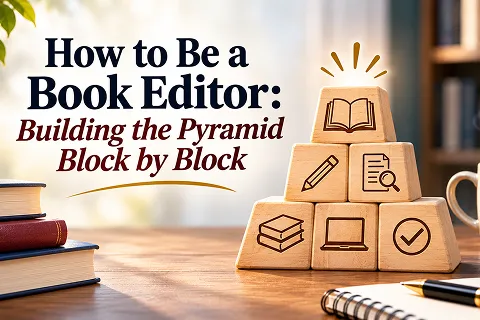
Table of Contents Think of a pyramid. At the very top sits one small block: the answer. Below it, wider layers hold the reasons, the
Table of Contents Some children’s books have a funny way of staying with us. Years after we’ve outgrown the pictures, we can still remember a