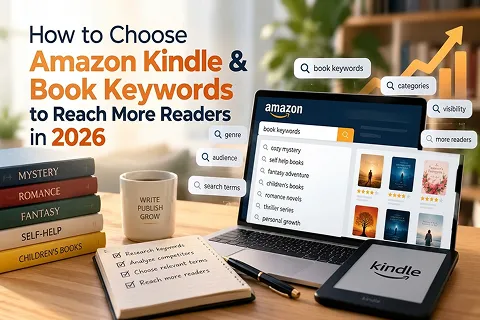
How to Choose Amazon Kindle & Book Keywords to Reach More Readers in 2026
Table of Contents You finished the book. You polished every chapter. Now one question keeps you awake. Will anyone find it? Readers rarely search for
You finished the book. You polished every chapter. Now one question keeps you awake.
Will anyone find it?
Readers rarely search for exact titles. Instead, they type ideas like “cozy mystery” or “books about confidence.” That is where Amazon Kindle & Book Keywords earn their keep. They connect your story with readers who already want it.
However, popular words alone will not do the job. The real goal is to find the words your readers actually use. In this guide, you will learn a simple, repeatable process. Along the way, you will see examples from a cozy mystery novel. Let’s walk through the steps together.
Picture a reader who loves small-town mysteries. She opens Amazon and types her favorite genre. Your novel fits perfectly. It features an amateur sleuth, a missing family heirloom, and a village full of secrets. Yet the reader never sees it. Your keywords may not match the reader’s words.
Amazon uses search terms, book details, and other signals to show shoppers relevant titles. Keywords give the platform extra information about your book. So the right Amazon Kindle & Book Keywords help the right readers discover you.
Broad words rarely help. The word “fiction,” for example, covers romance, thrillers, and fantasy. Your book gets lost in that crowd.
Of course, keywords are not the only factor. Sales history, covers, descriptions, and reviews all play a role. Still, strong keywords give your book a fair chance. Think of them as street signs. Without them, readers drive right past your door.
Many authors begin with the most popular terms. That sounds smart. More searches should mean more readers. Unfortunately, it rarely works that way. A popular phrase fails when searchers want a different book.
Instead, begin with one question. Who will love this story?
An author might describe a book as “a gentle tale of family, loss, and loyalty.” Mystery fans, however, type “cozy mystery with amateur detective.” Both labels fit. But only one matches real search habits. That insight sits at the heart of how to choose keywords for Amazon. You speak your reader’s language, not your own.
Think about the person most likely to buy your book.
Note which genres fill their shelf and which themes pull them in. Also note whether they love fast plots or slow, emotional stories.
Readers of fiction tend to follow feelings and cliches. The amateur investigator, the buried secret, the crime in a sleepy town may appeal to the mystery lover. Non-fiction buyers want results. They want to save money, learn a skill or solve an issue.
For example, a gardening guide can help beginners with tiny balconies. Likewise, a budgeting book can serve students with their first paychecks.
Once you know your audience, finding phrases gets much easier.
Next, study your manuscript closely.
Note what would make a shopper choose your book over another.
Maybe your mystery unfolds in a seaside village. Perhaps your heroine is a retired baker. Maybe your children’s story teaches kindness through a playful fox.
Write every quirk on a list. You will not turn every idea into a keyword. Still, readers often search for exactly these details. So treat the list as raw material.
You do not need pricey software to begin. Amazon itself hands you clues. In fact, learning how to find Amazon keywords starts with a blank spreadsheet and some curiosity. Open that sheet now. Then collect phrases as you explore. Do not worry about your final seven yet.
Open Amazon and choose the Kindle Store or Books department. Then type a phrase related to your book. As you type, Amazon suggests related searches. For example, try “dragon fantasy.” You may see dragon riders, magical worlds, or other themes.
Follow this simple routine:
Here is one warning. Autocomplete does not show exact sales numbers. It reveals possible interest, not guaranteed demand. Still, it makes a fine starting point.
Next, find titles that attract your audience. Do not limit yourself to bestsellers. Check new releases and independent authors, too. Read their descriptions closely. Notice how they describe stories, readers, and themes.
Romance novels, for instance, often mention “enemies to lovers” or “slow burn.” Those phrases reveal what readers expect. However, never copy another author’s keywords or description. Learn the pattern. Then write phrases that fit your own work.
The team at Kindlepreneur shares a helpful walkthrough of this idea. You can read it in their guide on how to choose Kindle keywords.
Reviews reveal details that descriptions miss. One reader may love a strong heroine. Another may praise the cozy setting. A third may adore the surprise ending. These comments show what leaves an impression.
If several readers mention one feature, you may have found a keyword idea. Still, check whether shoppers actually search for it. A lovely description is not always a useful search term.
Say you wrote a romance novel. You could use the word “romance.” After all, it describes your book. But countless titles share that word. Historical, paranormal, and contemporary romances all compete for attention. Now imagine “small town second chance romance.” That phrase points to one clear shelf.
Broad keyword | More focused keyword |
Romance | Small town second chance romance |
Mystery | Cozy mystery with female detective |
Fantasy | Fantasy adventure with dragons |
Cookbook | Easy vegetarian meals for beginners |
Self-help | Stress management for students |
These examples are starting points, not verified recommendations.
Broad terms help you scout a market. Searching “historical fiction,” for example, reveals popular eras and themes. You can then explore smaller corners of the genre. However, broad phrases draw heavy competition. New authors struggle to stand beside famous names. So use broad words to learn, not to lead.
Take a cookbook for busy parents. Someone searching “cookbooks” could want anything. Baking, gourmet, or vegan recipes all fit. In contrast, “quick family meals” signals a clear need. That reader may be a better match.
Of course, not every niche deserves a spot. Some attract very little interest. Others face more competition than they seem. So look for a phrase that fits your book and shows real demand.
Long-tail keywords are longer, more specific searches. Compare these examples:
Each step tells you more about the wanted book. Readers who type the last phrase know exactly what they want. Therefore, long-tail phrases deserve a test drive. However, longer is not always better. Too many details sound robotic, and few people type them. Amazon generally suggests short phrases of two or three words.
When choosing keywords for Amazon, pair your topic with one meaningful feature. Think “coastal town mystery” or “kindness books for preschoolers.” If a phrase sounds like word soup, toss it.
By now, you have a long list. Which ideas deserve a place in your KDP dashboard? This is where the real research begins. Before you lock in your Amazon search keywords, check what shoppers see for each phrase.
Enter one phrase into Amazon. Then study the books that appear.
Do they resemble yours? Do they target the same readers?
Suppose you wrote an adult thriller. If your phrase mostly shows children’s picture books, the match is poor. Skip it.
Your book should appear beside titles that appeal to a similar audience. That simple rule saves many authors from costly mistakes.
Next, study the leading books. Check whether famous authors fill the page. Note whether strong covers and hundreds of reviews dominate. Then see if newer indie titles appear.
A search full of established series is harder for a debut author.
Still, do not judge a keyword by review counts alone. Some books sell well with few reviews. Look at the whole market instead of one number.
Amazon Best Sellers Rank offers a clue about recent sales. Generally, a lower number suggests stronger sales. However, ranks change often. They also reflect total book sales, not one keyword’s results. Therefore, use rank alongside your other research. It will not reveal exact traffic for a phrase.
A popular keyword looks attractive at first. Yet if bestselling authors own every top spot, you will struggle. Now consider a smaller phrase. Its results match your book closely, and several indie authors appear there. That phrase may deserve more attention.
Still, you need evidence that shoppers search for it. Otherwise, you may target a quiet corner of Amazon with almost no readers.
You do not need complicated math. A spreadsheet works well. Score each phrase from one to five on these factors:
Factor | What to look for |
Relevance | Does the phrase truly describe your book? |
Reader interest | Is there evidence shoppers search for it? |
Competition | How strong are the books appearing? |
Search intent | Would those readers enjoy your book? |
Opportunity | Is the phrase worth testing? |
For more research tips, Reedsy’s guide explains how to choose keywords for your Amazon KDP book.
Then review the phrases with the best totals. This method will not predict sales. It simply helps you choose better. Often, a quieter phrase fits your book far better than a trending one.
Readers do not search for every book the same way. Thriller fans want suspense and twists. Romance readers hunt for favorite tropes. Nonfiction readers want answers. That is why choosing keywords for Amazon should reflect your book type.
Fiction keywords come from the reading experience. Romance readers may want second chances or slow burns. Mystery fans may search for amateur sleuths or missing persons. Fantasy readers may crave dragons and magical kingdoms.
However, stay honest. A brief romantic subplot does not make your thriller a romance. Use phrases that reflect a major part of your story.
Nonfiction shoppers arrive with a problem. They want to learn budgeting, build habits, or start a small business. So think about the problem your book solves. “Gardening” is a broad topic. “Vegetable gardening for beginners” names a clear need.
The same approach works for business, parenting, education, and personal growth. Ask who needs the information and what they hope to learn.
Parents, teachers, and caregivers usually buy children’s books. That changes your research. A parent may search for bedtime stories about kindness. A teacher may look for picture books about sharing. Age and reading level matter, too.
However, do not stretch the age range just to catch more searches. Let the book fit the children who will actually read it.
Amazon KDP gives authors up to seven keyword fields. Think of them as seven little doors. Each door should lead somewhere different. You do not need seven versions of one idea. Strong Amazon Kindle & Book Keywords use each field to add something new.
Imagine a lighthearted mystery about a missing heirloom. Your research might lead to phrases like these:
Keyword field | Example phrase |
1 | Amateur sleuth mystery |
2 | Small town detective story |
3 | Missing heirloom mystery |
4 | Lighthearted crime fiction |
5 | Female amateur detective |
6 | Humorous village mystery |
7 | Family secrets mystery |
These examples show how to organize ideas. They are not ready-made picks for every mystery. Research each phrase before you use it.
Suppose your title includes “Small Town Mystery.” Repeating those words adds little value. Instead, highlight another feature, such as the amateur detective or the missing heirloom. Amazon advises authors to avoid repeating details already covered by titles, categories, or other metadata. So spend your space wisely.
Each KDP keyword field has a character limit, commonly 50 characters. You do not need to use every character. Also, stay clear of misleading terms. Before publishing, review Amazon’s official KDP keyword guidelines to avoid mistakes with your book’s metadata.
Keywords and categories play different roles. Categories place your book in the store. Keywords add detail about its content. A historical romance, for example, belongs in a fitting romance category. Its keywords can then highlight a setting or relationship theme.
However, never pick an unrelated category because it looks less competitive. A reader browsing psychological thrillers may find a gentle family drama instead.The book may look lovely, but it is not what she came to find. Your categories, title, subtitle, and description should tell one consistent story.
Eager authors often rush this step. Others try to attract every genre at once. These errors show why choosing keywords for Amazon deserves patience.
A trending phrase may bring clicks. However, shoppers leave when they expect a different book. Do not label a cozy mystery a gritty thriller. Choose phrases that reflect the real reading experience.
You may admire a bestselling writer. You may believe her readers would love your book. Still, adding her name to your keyword fields is a mistake. Amazon restricts misleading references to unrelated authors. Instead, explore the themes that attract her audience. Then find accurate terms for your own work.
Phrases like “best book ever” sound impressive. Yet they describe nothing. Amazon also restricts misleading promotional language in keywords. Use your fields for useful facts about the book instead.
Sometimes a phrase sounds so obvious that you never check it. But a term that makes sense to you may not match how shoppers search. Even a quick look at suggestions and results reveals useful differences.
Manual research can take you far. You can use autocomplete, compare books, and read reviews for free. However, checking dozens of phrases takes time. That is where paid tools may help.
For example, Publisher Rocket estimates keyword demand and competition. These figures make comparison easier. Still, outside tools lack full access to Amazon’s internal search data. Their numbers are estimates, not promises. First-time authors can start by hand. Authors with several titles may enjoy the shortcut.
AI can also help you brainstorm. Describe your genre, characters, themes, and audience. Then ask for possible phrases. However, there is a big gap between a keyword idea and a researched keyword. AI may suggest natural phrases that attract little interest. So never paste its ideas straight into KDP. Check each one through Amazon first.
AI offers ideas. Your research decides which ones deserve attention. Either way, understanding your readers matters more than owning expensive software.
Imagine someone searching for an uplifting family novel. Your book appears in the results. But the cover looks like a horror film, and the description barely explains the plot. That reader will keep scrolling. Keywords open the door. Your listing must invite readers inside.
Readers recognize genres through design. A cozy mystery looks different from a psychological thriller. Likewise, a picture book follows different visual rules than a business guide. Your cover need not imitate another title. However, it should give readers a fair idea of what waits inside.
A good description helps readers decide quickly. For fiction, introduce the main conflict and build curiosity. For nonfiction, explain the problem and what readers will learn. Avoid turning the description into a pile of search terms. People should enjoy reading it.
Keep your title clear and easy to remember. A subtitle can add useful detail, especially for nonfiction. However, avoid a long chain of keywords just to attract searches. A meaningful title makes a stronger first impression.
Many authors reach this stage and feel unsure about formatting, covers, or release steps. That is normal. Professional book publishing support, such as the guidance offered by Next Chapter Publishings, can help you prepare a listing that matches your keywords. A cleaner listing gives shoppers more reasons to click.
Turn your finished manuscript into a professionally published book with expert support.
Publishing does not lock your keywords forever. Reader interests shift. New titles enter the market. You may also discover better phrases. So keep a record of every keyword you choose. Add notes about competing books and why each phrase looked promising.
Later, compare those notes with your book’s performance. If you run Amazon Ads, campaign reports may offer clues about paid searches. However, do not confuse advertising results with organic keyword performance. They tell different stories.
Also, avoid changing all seven fields every few days. Instead, make one considered update at a time. Record the change and the reason. That way, you build a clear picture of what works.Your Over time, your Amazon Kindle & book keywords improve through evidence, not guesswork.
If the process still feels overwhelming, break it into small tasks. You do not need to finish in one sitting. This plan shows how to choose keywords for Amazon one step at a time.
By Friday, research replaces guesswork. You will also know how to find Amazon keywords that match real reader behavior.
Readers discover books in many ways. They hear about novels through social media, newsletters, and friends. Yet Amazon remains a busy place where readers search. That makes keyword research worth your time.
However, trends should not control every decision. A phrase may explode after a bestseller or a viral post. But if your manuscript offers something different, it won’t help. Rather, emphasize what makes your book different. That includes genre, themes, writing style, and presentation.
The goal is not to reach everyone. It is to reach people who will enjoy what you wrote. Smart Amazon search keywords support that goal, one phrase at a time.
Before you complete your KDP listing, ask yourself:
These checks help you catch mistakes before publication. You cannot predict every result. However, you will have a solid reason for each choice.
Writing a book takes time, patience, and plenty of heart. Naturally, you want readers to discover it. Your story can reach readers, too. Research, test, and tweak. Slowly, the right readers will find your book.
Start with your audience, not the most popular terms. Explore what readers look for. Study similar books. Then choose phrases that genuinely fit your work. Now you know how to choose keywords for Amazon with confidence, and you have a clear plan for Amazon Kindle & Book Keywords that work.
Do not forget the rest of your presentation. A clear description, suitable categories, and a professional cover help readers decide. If you are preparing to publish, Next Chapter Publishings can help you take the next step. Your story is ready to share. Give it the preparation it deserves.
Turn your finished manuscript into a professionally published book with expert support.
They can help your book appear in searches that match its audience. However, shoppers also weigh your cover, description, price, and reviews. Strong Amazon Kindle & book keywords work best alongside a well-prepared listing.
Yes. You can change them in your KDP dashboard. But look for new phrases before you replace old ones. Keep a record of each change so you can review your choices later.
It can be, particularly if the formatting, production or release stages are unknown. You’ll save time and avoid frequent mistakes by using a professional. Next Chapter Publishings like a company can walk you through the process. Before you select a service, consider what support you need.
Recent Post
Table of Contents You finished the book. You polished every chapter. Now one question keeps you awake. Will anyone find it? Readers rarely search for
Table of Contents Imagine your book sitting on a shelf where no one looks. The cover looks great. The story is strong. You spent months

Table of Contents Publishing your book can feel like reaching the finish line. Yet when a reader finds that book on Amazon, another important journey